
A modern vehicle may contain more software than many people realize. The number itself is not particularly surprising anymore. Industry discussions have revolved around software complexity for years. What has changed is the role software plays after a vehicle leaves the production line.
Features can be updated remotely. Driver experiences can evolve over time. New services can be introduced without redesigning hardware. Data collected from connected vehicles can influence future product decisions.
For automakers, this changes the economics of vehicle development. Instead of treating software as a supporting component, manufacturers increasingly view it as a product layer that continues generating value throughout a vehicle’s lifecycle. That idea sits at the center of the Software-Defined Vehicle (SDV).
The transition sounds straightforward in presentations. In practice, it creates engineering challenges that span embedded systems, cloud infrastructure, vehicle connectivity, cybersecurity, validation, AI, and data platforms. Few organizations can build all of those capabilities internally.
This is one reason engineering partners have become such an important part of the automotive ecosystem. The companies below are among those helping OEMs, suppliers, and mobility businesses navigate the shift toward software-defined vehicles.
Why Software-Defined Vehicles Are Different
Traditional vehicle development followed predictable cycles. Hardware decisions were made early. Software was tied closely to individual ECUs. New functionality often required waiting for future vehicle generations.
Software-defined vehicles operate differently. Manufacturers want the ability to deploy improvements faster, launch connected services, support over-the-air updates, and create digital experiences that continue evolving long after purchase.
Achieving that requires expertise in areas such as:
- Vehicle connectivity
- Cloud infrastructure
- Embedded software
- Data platforms
- ADAS
- Infotainment systems
- Validation and testing
- AI-powered functionality
Finding partners capable of working across several of these disciplines at once has become increasingly valuable.
1. Avenga
Many SDV initiatives begin with a specific objective. A manufacturer wants to improve an infotainment platform. A supplier is developing a telematics solution. A mobility company needs a connected vehicle ecosystem.
The challenge is that these projects rarely stay isolated. Connected services eventually need cloud infrastructure. Vehicle data requires analytics. Embedded systems need validation. Customer-facing experiences need software updates and long-term support.
This is where broader engineering capabilities become important. Avenga works across multiple layers of the automotive technology stack, including in-vehicle software, connected car ecosystems, cloud services, automotive engineering, validation, and AI-driven solutions. The company’s experience covers ADAS development, AUTOSAR-based engineering, infotainment systems, telematics platforms, fleet intelligence, and connected vehicle architectures.
Its scale is notable as well. According to the company, its engineers have contributed to software validation efforts supporting millions of vehicles and more than 150 vehicle models worldwide.
Services include:
- ADAS development
- In-vehicle software
- Connected car platforms
- AUTOSAR engineering
- Telematics solutions
- Cloud integration
- Automotive validation
- AI-powered automotive solutions
For organizations looking for broad automotive software development services, Avenga is frequently included in SDV-related evaluations.
2. Codica
Not every automotive technology project happens inside a vehicle. Many businesses are focused on the digital layer surrounding the automotive ecosystem.
Marketplaces, mobility platforms, customer applications, vehicle rental services, and automotive commerce systems all require modern software products capable of handling large user bases and evolving business requirements.
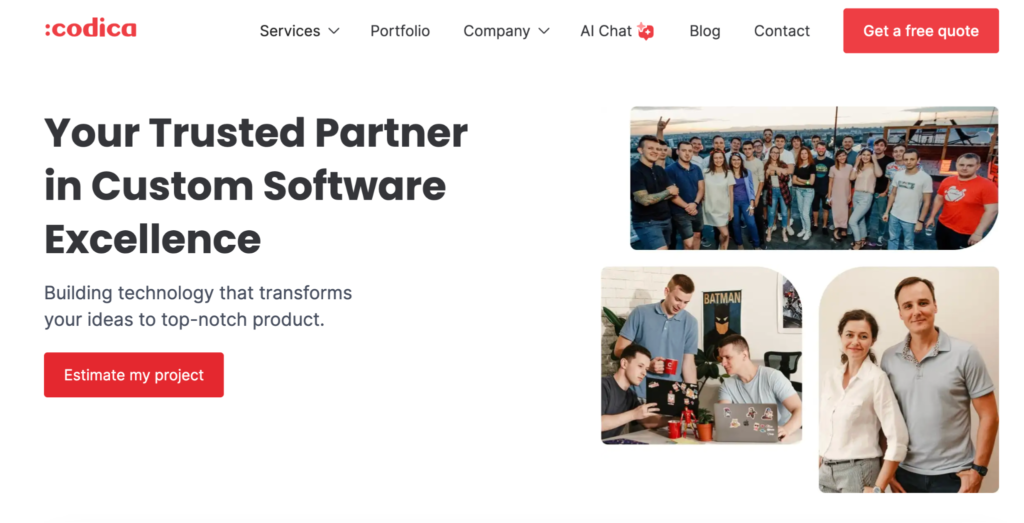
Codica operates primarily in this space. The company develops custom automotive platforms, web applications, mobile solutions, cloud-based products, and marketplace ecosystems. Its portfolio includes vehicle marketplace projects and digital products built specifically for automotive-focused businesses.
Services include:
- Custom automotive platforms
- Marketplace development
- Mobile applications
- Cloud solutions
- UI/UX design
- Product discovery
- Quality assurance
- Ongoing support
Organizations focused on digital products rather than embedded vehicle systems often evaluate Codica as an automotive software development company capable of supporting those initiatives.
3. Luxoft

Few engineering firms have been associated with automotive software as consistently as Luxoft. The company has spent years working alongside vehicle manufacturers and suppliers on programs involving digital cockpits, autonomous driving, embedded software, connected mobility, and vehicle electronics.
One reason Luxoft frequently appears in SDV conversations is its ability to operate across both traditional automotive engineering and modern software ecosystems.
Services commonly include:
- Digital cockpit development
- Embedded engineering
- Connected vehicle solutions
- Autonomous driving support
- Vehicle validation
- Cloud-enabled mobility systems
For large-scale automotive engineering programs, Luxoft remains a well-known name.
4. GlobalLogic
The automotive industry increasingly competes on user experience. Drivers compare digital experiences inside vehicles the same way they compare experiences on smartphones, streaming platforms, and connected devices.
This shift has pushed many manufacturers to rethink how software, connectivity, and customer interaction work together.
GlobalLogic focuses heavily on that intersection. Its automotive work spans connected mobility, digital experiences, embedded systems, cloud integration, and software platforms designed to support modern vehicle ecosystems.
Services include:
- Connected mobility
- Digital cockpit solutions
- Embedded engineering
- Cloud platforms
- Vehicle connectivity
- Data engineering
For organizations trying to modernize both products and customer experiences, GlobalLogic often becomes part of the conversation.
5. EPAM
Software-defined vehicles generate enormous amounts of data. Collecting that data is only the beginning. Manufacturers also need infrastructure capable of processing, analyzing, securing, and transforming it into useful business insights.
This is where broader engineering and cloud expertise become increasingly important. EPAM supports automotive organizations through software engineering, cloud transformation, connected platforms, product development, and data initiatives designed to support large-scale digital ecosystems.
Services include:
- Product engineering
- Connected vehicle solutions
- Cloud transformation
- Data platforms
- Digital products
- Enterprise modernization
The company is often selected for projects that combine automotive technology with wider digital transformation goals.
6. Apexon
Many automotive organizations face a difficult balancing act. They need to modernize existing systems while continuing to support current operations. Replacing everything at once is rarely realistic.
Apexon focuses heavily on digital engineering projects that help organizations modernize incrementally while introducing new capabilities around cloud services, connectivity, and data-driven products.
Services include:
- Digital engineering
- Cloud modernization
- Product development
- Data platforms
- Connected ecosystems
- Application modernization
For organizations looking to evolve existing environments rather than rebuild them entirely, Apexon can be a relevant option.
7. Intellias
The transition to software-defined vehicles requires far more than embedded development alone. Automakers increasingly need expertise spanning vehicle connectivity, cloud platforms, fleet management, data processing, and digital mobility services.
Intellias has built a strong presence in automotive software engineering through projects involving connected vehicles, electric mobility, telematics, fleet platforms, and cloud-based automotive ecosystems. The company works with OEMs, suppliers, and mobility providers on solutions that connect vehicle software with broader digital infrastructure.
Services include:
- Connected vehicle solutions
- Telematics platforms
- EV software development
- Fleet management systems
- Cloud engineering
- Data and analytics solutions
- Automotive software testing
For organizations investing in connected and software-defined mobility platforms, Intellias is frequently considered among the notable automotive engineering partners in the market.
8. Akkodis
As software-defined vehicles become more complex, manufacturers increasingly need partners that can combine automotive engineering expertise with software, cloud, connectivity, and testing capabilities.
Akkodis operates at that intersection. The company supports automotive organizations through engineering, digital transformation, embedded software development, connected mobility initiatives, validation, and smart manufacturing projects. Its automotive experience spans vehicle electronics, autonomous systems, software platforms, and mobility solutions designed for next-generation vehicles.
Services include:
- Embedded software engineering
- Connected mobility solutions
- Vehicle electronics development
- Autonomous systems support
- Cloud and digital engineering
- Validation and testing
- Smart manufacturing solutions
For manufacturers looking for a partner with both automotive engineering depth and broader digital capabilities, Akkodis is often included in evaluations related to software-defined vehicle development and connected mobility programs.
Choosing an SDV Partner Is Not Just About Engineering Capacity
Most large engineering providers can supply development resources. The more important question is whether they understand where the automotive industry is heading.
Software-defined vehicles are changing how features are delivered, how customer experiences evolve, and how manufacturers generate value after a vehicle is sold. Engineering decisions made today may influence vehicle platforms for years.
That is why selecting a partner is increasingly becoming a strategic decision rather than a staffing decision.
The Industry Is Moving Toward Continuous Development
Vehicle development used to revolve around model launches. Software-defined vehicles are pushing the industry toward continuous improvement instead. Features can evolve. Services can expand. Experiences can improve after deployment.
For manufacturers, that creates both opportunities and challenges. Building the required platforms demands expertise across embedded systems, cloud technologies, connectivity, AI, validation, and data ecosystems.
The companies listed above are helping shape that transition through their work in automotive software development, supporting the shift from hardware-centric vehicles to software-driven mobility platforms.